

Massage for Gay, Bi, Queer, and Curious Men: Why Affirming Touch Matters
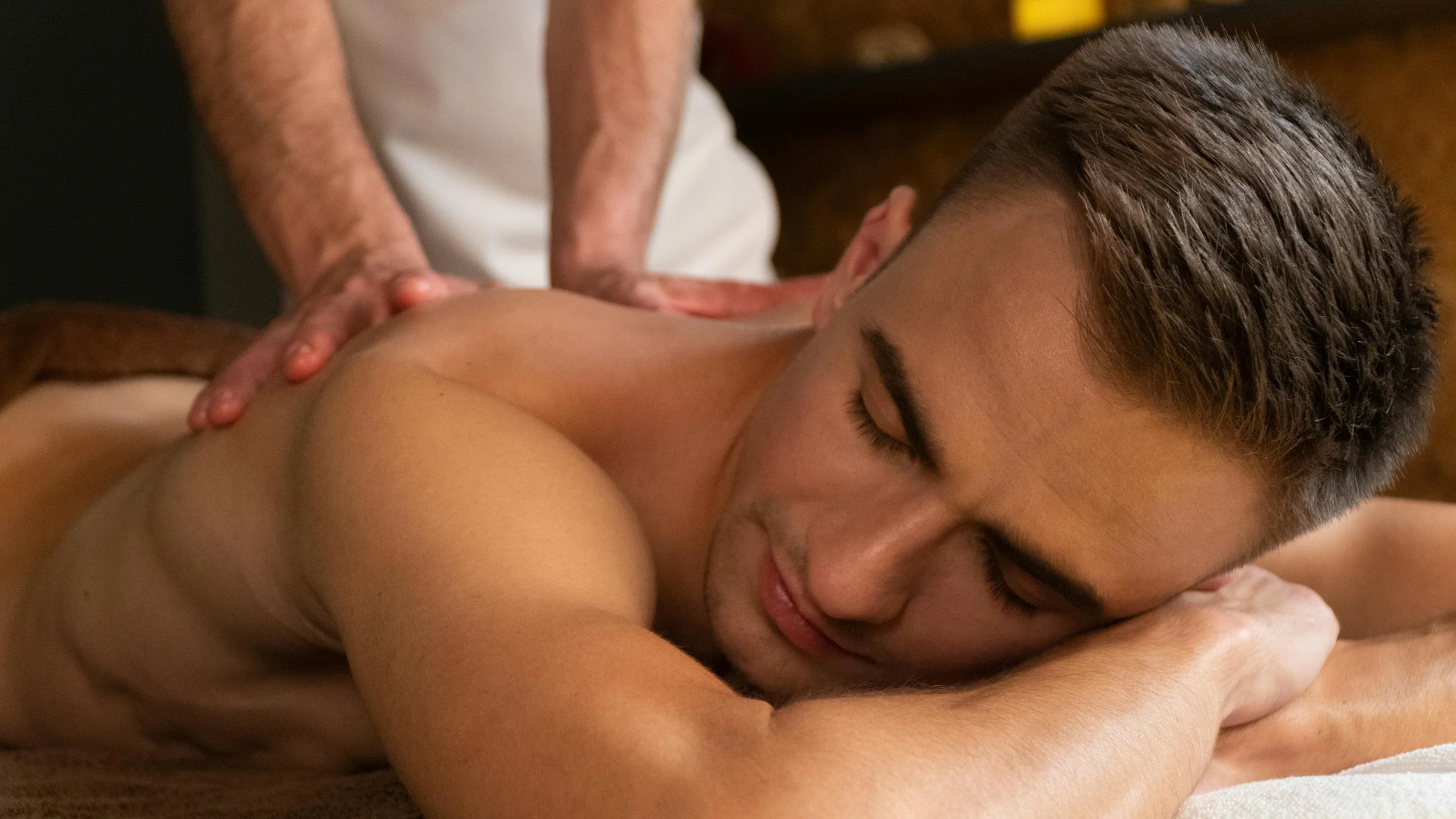
There is a difference between being touched and feeling safe enough to receive touch.
That may sound obvious, but for many gay, bi, queer, and curious men, it is not always simple. Touch can carry history. It can bring up desire, shame, self-consciousness, longing, grief, relief, awkwardness, and the occasional thought of, “What am I supposed to do with my arms right now?”
A massage may seem like a straightforward thing. You book a session. You lie on the table. Someone works on your shoulders. Ideally, you leave feeling less like a clenched fist in human form.
But for many men, especially men whose bodies, desires, or identities have been judged, hidden, fetishized, mocked, or misunderstood, bodywork can feel vulnerable before it even begins.
That is why affirming touch matters.
What I Mean by Affirming Touch
Affirming touch is not complicated, but it is deeply important.
It means touch offered in a space where you do not have to explain, minimize, edit, or defend who you are. It means your body is treated with respect. Your boundaries are taken seriously. Your nervousness is not mocked. Your identity is not made into a curiosity. Your sexuality is not treated like a problem, a punchline, or an invitation.
In my work, affirming touch means you are met as a whole person.
Not a category. Not a fantasy. Not a diagnosis. Not a walking collection of assumptions with nice calves.
You are a man with a body, a history, a nervous system, and a need for care. That should not be revolutionary, and yet for many of us, it can feel surprisingly rare.
Why Massage Can Feel Vulnerable for Queer Men
Many queer men have complicated relationships with their bodies.
Some of us grew up learning to monitor ourselves carefully: how we stood, how we spoke, how we moved, how much softness was allowed to show. We learned to read rooms quickly. We learned when to hide desire, when to perform confidence, when to make ourselves smaller, and when to act like nothing hurt.
The body remembers all of that.
So when you step into a massage session, you may not only be bringing tight shoulders or lower back tension. You may also be bringing years of self-surveillance. You may be bringing body shame from gay culture, family expectations, religion, dating apps, locker rooms, or the brutal little theater of comparison that happens in our own heads.
Massage can touch more than muscle. It can touch the places where you have been bracing.
That does not mean every session becomes deep or emotional. Sometimes a massage is simply a massage, and thank God for that. But safe, respectful touch has a way of reminding the body that it does not have to stay on guard forever.
The Difference Between Tolerating Touch and Receiving Touch
A lot of men are good at tolerating touch.
They can get through it. They can perform comfort. They can be polite. They can say “that’s fine” even when something is not quite fine. Many of us became very skilled at being easy, agreeable, and low-maintenance because asking for what we wanted once felt risky.
Receiving is different.
Receiving asks you to be present enough to notice what feels good, what feels too intense, what helps you soften, and what makes you tense. It asks you to communicate. It asks you to believe, even a little, that your comfort matters.
This can be surprisingly tender work.
I have seen men come in for massage and slowly realize how rarely they allow themselves to be cared for without having to earn it, perform for it, or turn it into something else. There is often a quiet moment when the nervous system starts to believe, “Oh. I can just be here.”
That moment is beautiful. Not dramatic. Not cinematic. No swelling soundtrack. Just a man remembering that his body deserves care.
For Curious Men, Safety and Clarity Matter
Some men who come to my work identify as straight, curious, questioning, fluid, or simply not interested in putting a neat label on every part of themselves. I respect that.
Curiosity deserves care. It does not need to be rushed, shamed, advertised, or turned into a grand identity announcement before you have even had a chance to understand what you feel.
An affirming massage space gives you room to be honest with yourself without pressure. You do not have to arrive with perfect language. You do not have to explain your entire life story. You do not have to prove anything about your sexuality, masculinity, or comfort with another man.
You can simply receive professional, respectful bodywork in a space where your questions, boundaries, and privacy are honored.
That kind of clarity is especially important. Affirming touch does not mean vague touch. It means the opposite. It means expectations are clear, consent is ongoing, and the session remains professional, grounded, and respectful.
Massage Is Not a Test of Masculinity
One of the quieter reasons men avoid massage is that receiving care can feel uncomfortably close to vulnerability.
We are taught to be strong, composed, independent, desirable, capable, and ideally not in need of anything more emotionally complex than protein and a sturdy chair. But bodies have needs. Nervous systems have needs. Human beings have needs.
Massage is not a test of toughness. It is not a test of masculinity. It is not something you have to “handle” correctly.
You are allowed to like gentle pressure. You are allowed to need firm pressure. You are allowed to feel awkward at first. You are allowed to ask questions. You are allowed to be quiet. You are allowed to enjoy being cared for without making it mean something embarrassing.
Honestly, if more men were allowed safe, affirming, nonjudgmental touch earlier in life, I suspect half the internet would calm down.
Why Affirming Touch Helps the Body Relax
A body cannot fully relax if it is busy managing shame.
If you are wondering whether you will be judged, misunderstood, fetishized, or made uncomfortable, your nervous system is still working. Even if the room is calm. Even if the music is soothing. Even if the lotion smells like a forest with excellent branding.
Affirming care helps lower that internal vigilance.
When you know the practitioner understands queer experience, respects consent, welcomes different kinds of bodies, and does not treat your identity as an issue, your body has more permission to settle. You can breathe more deeply. You can stop scanning for danger. You can allow the massage to actually reach you.
That is the difference between a technically good massage and a truly supportive one.
What to Expect at Men’s Bodywork LA
At Men’s Bodywork LA, my goal is to create a massage experience that feels professional, respectful, warm, human, and, above all, intentional.
We begin with a conversation about what you need: tension relief, relaxation, grounding, stress reduction, body reconnection, or simply a quiet hour where you do not have to hold everything together. We clarify pressure, areas of focus, boundaries, and comfort level.
The work may be therapeutic, relaxing, sensual in the sense of being connected to the senses, or more restorative depending on what you choose. What it is not: judgmental, rushed, shaming, or unclear.
You do not have to show up as your most confident self. Most people do not. You can bring your tight neck, your tired back, your nervousness, your curiosity, your body exactly as it is, and your perfectly normal uncertainty about what to do before your first massage.
That is all welcome.
The Deeper Gift of Affirming Touch
Massage for gay, bi, queer, and curious men is not only about relaxation, though relaxation is lovely and deeply underrated.
It is also about being met without having to brace.
It is about letting the body experience care in a space where your identity does not need to be hidden or explained. It is about feeling touch that is respectful, attentive, and clear. It is about remembering that your body is not a problem to solve, a performance to maintain, or a thing to compare against everyone else’s carefully angled bathroom selfie.
Your body is where your life is happening.
It holds your stress, your history, your longing, your pleasure, your guardedness, your wisdom, and sometimes your entire week in one impossibly tight shoulder.
Affirming touch matters because it gives the body a different message.
You are safe here.
You are respected here.
You do not have to perform here.
And for many men, that alone is a powerful beginning.