


Frequently asked questions.
General FAQs
-
ITrevor James offers touch therapy, massage therapy, cuddle therapy, sacred intimacy, intimacy coaching, couples intimacy coaching, workshops, and retreats for men who want to feel more connected to their bodies, their desire, their relationships, and themselves.
Some clients come because they need skilled, grounding touch. Some come because they feel lonely, touch-starved, emotionally guarded, or disconnected from intimacy. Others are exploring desire, shame, body confidence, or relationship patterns.
The work is consent-forward, body-aware, and grounded in emotional safety.
-
Good question. I’m a Certified Touch Therapist and Masseur, and Touch & Intimacy Coach. I help men reconnect with themselves—body, heart, and spirit—through touch, intimacy, and authentic connection. My work includes massage therapy, cuddle therapy, couples and individual coaching, sacred intimacy sessions, workshops, and retreats. Each experience is designed to help men feel safe, seen, and deeply nourished.
-
I am not a licensed psychotherapist, sex therapist, or medical provider. I am a certified touch therapist and masseur with eight years of practice. My training spans somatic bodywork, Tantra and sacred sexuality traditions, and intimacy and relationship coaching. I have been featured in The New Yorker, KCRW, and 60 Second Docs, and am the author of On Being Seen: Chronicles of a Touch and Intimacy Therapist, a book on male intimacy. I work exclusively with adult men.
My work can be therapeutic in the broader sense: supportive, reflective, body-based, and emotionally meaningful. But it is not a substitute for psychotherapy, medical care, trauma treatment, or mental health support. Many clients work with me alongside therapy, coaching, bodywork, or other healing practices.
-
Yes, many clients come because they feel touch-starved, lonely, affection-deprived, or emotionally isolated.
Touch deprivation can be hard to talk about, especially for men. You may crave closeness while also feeling nervous, ashamed, or unsure how to receive it. Massage therapy, cuddle therapy, mindful touch, and intimacy coaching can each offer a different doorway back into safe, respectful connection.
-
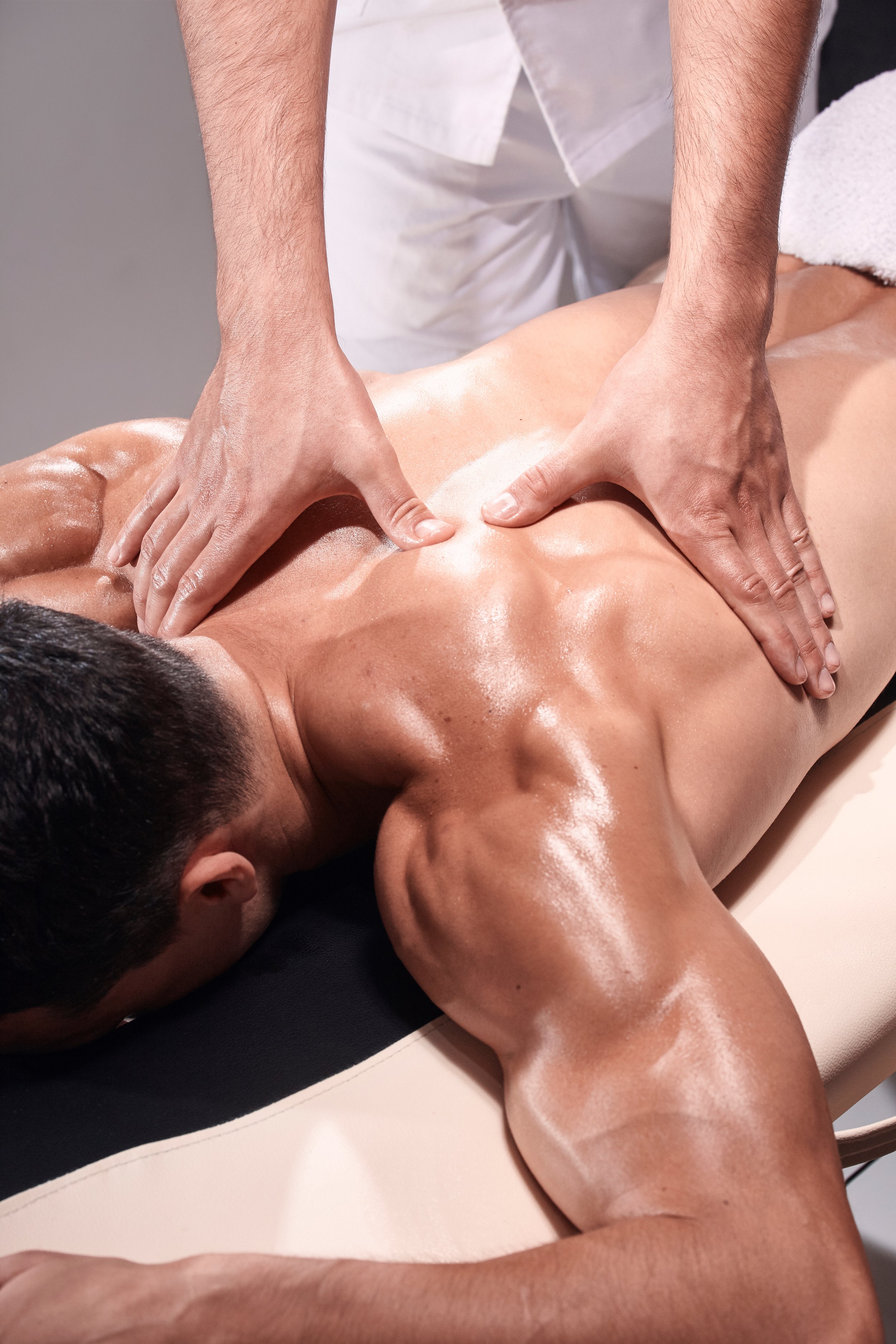
Massage therapy focuses on relaxation, release, and body awareness.
Cuddle therapy centers on emotional safety and platonic intimacy.
Sacred intimacy invites a deeper exploration of erotic energy and embodied connection.
Workshops and retreats blend these practices in community, where learning and transformation unfold together. -
I am located in Hollywood on the corner of Waring Avenue and Wilcox in Los Angeles.
-
My online booking tool (https://trevorjamesla.as.me) shows the latest available slots. You can also text or call 213.588.4242 for special requests.
-
Cash is preferred but I also accept Venmo, CashApp, Zelle and all major credit cards (with a $5 surcharge).
-
I work primarily with men—gay, bisexual, straight, curious, and everything in between—who are ready to explore touch, intimacy, and authenticity in a safe, judgment-free space.
-
I fill the niche for men who prefer the touch of other men for bodywork regardless of sexual orientation.
Also because men need spaces to feel safe in their vulnerability, desire, and longing for connection. Too often we’re taught to armor up. My work offers a place to soften, to feel, and to come home to yourself.
-
Tips and gifts are never required, so I will receive any additional generosity you choose to extend me with surprise and excitement.
-
My work is about connection, healing, and embodiment—not performance or gratification. While sessions may include erotic energy, everything is guided by consent, presence, and clear boundaries.
-
This work is for men who want to feel more connected to themselves, their bodies, their desire, and their relationships.
I work with gay, bisexual, straight, curious, questioning, and sexually fluid men. Some clients are single. Some are partnered. Some are exploring intimacy after grief, divorce, shame, burnout, religious conditioning, sexual anxiety, or years of emotional guardedness. You do not need to have the perfect words for what you are experiencing before you begin.
-
Yes. I work with straight men, gay men, bisexual men, curious men, and men who do not feel the need to explain themselves neatly.
Many straight men seek this work because they want healthier touch, more emotional openness, more confidence in intimacy, or a place to explore male-to-male care without judgment. Your sexuality is not something you have to prove, defend, or perform here.
-
Yes. Many bisexual, bicurious, sexually fluid, and questioning men come to this work because they want a private, respectful space to understand their desire, their boundaries, and their relationship with touch.
There is no pressure to label yourself. The work is not about pushing you toward an identity. It is about helping you feel more honest, grounded, and at ease with yourself.
-
Yes. I offer couples intimacy coaching for partners who want to reconnect emotionally, physically, and erotically.
Couples often come when they still care about each other but feel distant, stuck, sexually disconnected, or unsure how to talk about what they really want. Sessions may focus on communication, touch, desire differences, emotional safety, consent, trust, and rebuilding a sense of closeness.
-
No. Many clients arrive with only a feeling: “I know something needs to shift, but I don’t know what.”
That is enough. If you are unsure whether to book massage, cuddle therapy, sacred intimacy, or intimacy coaching, you can start with a free 15-minute Clarity Call. We can talk through what you are looking for and choose the most appropriate next step.
-
Yes. Your privacy matters deeply.
Clients often bring personal questions about touch, sexuality, shame, relationships, body image, loneliness, desire, and vulnerability. Everything you share is treated with discretion, care, and respect. I do not disclose your personal information or session details.
-
Choose massage if you want bodywork, relaxation, and physical release.
Choose cuddle therapy if you want safe, platonic, nurturing touch.
Choose sacred intimacy if you want a deeper body-centered exploration of sensuality, vulnerability, desire, or shame.
Choose intimacy coaching if you want support understanding your patterns around connection, relationships, communication, desire, or emotional availability.
If you are unsure, start with a Clarity Call.
-
Yes. Free, easy street parking is available on Waring Avenue and surrounding streets. In the unlikely event that you do not find parking, I have an extra space in the garage I can let you access.

About Sessions
-
The first session begins with conversation. We talk about what brought you in, what you are hoping for, what feels tender or uncertain, and what boundaries need to be honored.
From there, the session depends on what you booked. A massage session may focus on relaxation and bodywork. A cuddle therapy session may focus on platonic touch and nervous system comfort. Coaching may focus on patterns, questions, and next steps. Sacred intimacy may include more embodied exploration. You are never expected to rush or perform.
-
You choose your level of comfort. Many clients prefer to undress for massage or intimacy work, but you’ll always have agency. I’ll never ask you to do anything you haven’t consented to.
-
Sessions could be 60 minutes to two hours depending on the session. That gives enough time to drop in, relax, and move beyond the surface layers of tension or anxiety.
-
Yes. I offer virtual coaching and guided embodiment sessions for select services for clients outside Los Angeles or those who prefer to work from home. Touch may not be physical, but intimacy and connection absolutely are.
-
Absolutely. Everything shared in session stays private. I hold a strong code of ethics, clear consent protocols, and a zero-tolerance policy for disrespectful behavior.
-
That’s totally natural. Touch is powerful, and arousal is simply one of the body’s responses. We treat it with mindfulness, not shame. It’s welcome—but it’s never the goal.
-
Then you’re human. That is very normal.
Many clients feel nervous before their first session, especially if they are talking about touch, intimacy, sexuality, loneliness, shame, or body confidence. You do not have to arrive polished, perfectly articulate, or completely comfortable.
Part of the work is creating enough safety that you can be honest at your own pace.
-
Yes. I offer couples coaching and guided touch sessions that help partners reconnect, communicate, and rediscover pleasure and intimacy in new ways.
-
Book a free 15-minute initial consultation call. We’ll talk through what you’re hoping for, and find the best path together.
-
No. Bodywork, coaching and sacred intimacy sessions are generally not covered by insurance and I do not bill insurance directly.

Massage FAQs
-
This is YOUR session. If you want anything changed: pressure, areas worked, position or if you are too hot or too cold ... please let me know! My feelings won’t be hurt by you asking for something that will make you more comfortable. I want this to be the best experience for you to relax and enjoy. Also, what you requested in one session may be different in another. If you had a full body massage last time, but this time you only want your back/neck/shoulders/arms worked, it's perfectly fine to let me know.
-
You should undress to the level you are comfortable. For a full body massage, or a sensual massage most get completely undressed.
-
If you’re uncomfortable with getting a specific area treated don’t be embarrassed to mention it to me. I can avoid those areas. I will typically ask you before I begin your massage.
-
Sure, if you'd like to talk go right ahead. The important thing to remember is that this treatment is all about you relaxing and enjoying the experience. In many instances, people may feel more relaxed starting off talking, and as the massage progresses, enter quiet states of relaxation. The important issue here is that there are times when you need to speak up. If I am doing anything that is making you uncomfortable, please let me know immediately. Also, let me know if you get too warm or too cold, if the room is too bright, or if the pressure needs to be changed (lighter or deeper). If something is not working for you it’s perfectly ok to let me know!
-
It means everything is working! Yet, most men avoid massage for fear this will happen to them. Or, they get a massage but are unable to relax because of this fear. But there is no reason to be embarrassed. It is entirely normal get an erection even during a non-sexual, therapeutic, full body massage. Touch administered to any part of the body can activate the parasympathetic nervous system, which can result in a partial or complete erection. Besides, what’s an erection between men? We all get them. Just relax and enjoy the massage.
-
Make yourself comfortable. If I need you to adjust your position, I will either move you, or ask you to move what is needed. Otherwise, change your position anytime to make yourself more comfortable. Many people close their eyes and relax completely during a session; others prefer to talk. It's up to you. It is your massage, and whatever feels natural to you is the best way to relax.
-
You can expect to receive an excellent, and relaxing massage combined with sensual elements, if you so choose. I will use established massage techniques together with sensual touch during your massage and I generally allow mutual touch. Do not hesitate to ask questions at any time. (You can also read my blog on gay massage etiquette or this one on massage etiquette).
-
Absolutely! It is, first and foremost, a massage like you would get anywhere else, preformed by an experienced masseur. You get to choose how sensual — or not — you want your experience to be. Your sexuality is your own business and I won’t ask. Nothing in the world can ‘make you gay’. Whether you want to call it ‘m4m massage’, ‘men’s massage’, or ‘gay massage’, it’s all the same to me. You can read my blog post about this. This is a judgment-free zone, and you will be in complete control at all times. You can be as involved or not as you want, so you will not be made to do anything you’d rather not do.
-
Massage is in itself inherently sensual. The main difference between a regular and ‘sensual’ massage is intent. Sensual massage is still a regular massage, but there are just fewer boundaries on how I touch you. I can provide more of a sensual session with erotic elements. But those elements vary depending on how well the client and I interact, communicate, and what boundaries are agreed on before the session. When requesting a session, I’d rather you not discuss your sexual fantasies with me through text, or over the phone. I always prefer to discuss boundaries in person.
-
I do not offer sex with clients.
Cuddling FAQs
-
There are almost 80 ways to cuddle, so it’s different for every session. People are unique and have their own preferences. Some like to talk, some don’t. Some like a lot of physical contact, some like a little. Sometimes you might feel lively and playful, other times you might feel quiet and introspective. There are a lot of right ways to cuddle! Half of the fun is in discovering what is right for YOU. Have fun!
-
Once you’ve changed and gotten settled, we’ll chat for a few minutes to get to know one another, and then I’ll guide you through some breathing and relaxation activities to get you started. You will have a chance to ask any questions you might have. Our session could include eye-contact, hugging, sharing conversation or quiet, hand-holding, caressing, spooning and lots of other activities. There are almost 80 different cuddling positions, so there’s something for everyone. Our session can be at my place, or your place, or in a public place. It could be a walk in the park holding hands, or cuddling in the movie theaterYou can come with your ideas and requests. What I offer you is a safe space to feel loved, understood, and appreciated.
-
Yes, absolutely! Please allow yourself to – it can feel amazing to cry while you’re being held.
-
How much you talk and what you talk about is entirely up to you.
-
Yes, of course. If sleeping is something you enjoy as part of your cuddle therapy, then go right ahead.
-
If you become uncomfortable in any way at any time, please say so. Stop whatever is causing discomfort and adjust accordingly. Please do not wait until your discomfort is large, do this at the first hint of it. This is your session and none of it needs to feel any less than great! If you would like to end your session early for any reason simply say so.
-
Arousal is a natural and healthy human response to all kinds of things including touch and should not make you feel embarrassed. Acknowledge it, or celebrate your being a healthy human, and let go of it. However, you can ask to switch positions or take a break if you feel awkward about it.

Sacred Intimacy/Intimacy Coaching FAQs
-
Sacred intimacy is a body-centered practice that works with erotic energy, breath, and presence to help men reconnect with themselves at a deeper level than physical release alone. It draws on somatic and tantric traditions. Unlike massage, which focuses primarily on the body and muscular tension, sacred intimacy works with the whole person: body, energy, and spirit. Sessions are guided, consent-based, and move at your pace. Many men come to it after years of intimacy that felt mechanical or disconnected, looking for something more real.
-
Yes. Most men who come to sacred intimacy sessions are doing something genuinely new. You don't need prior experience with tantra, bodywork, or any particular spiritual tradition. You need curiosity and a willingness to show up. We start with a conversation, set intentions together, and go from there. Nothing happens without your full agreement at every step.
-
No. Sacred intimacy is a guided, intentional practice that works with erotic energy in a conscious, therapeutic context. It is not a euphemism for sexual services. The distinction matters: this is healing work, not performance or gratification. If you are looking for something transactional, this is not the right fit.
-
Sacred intimacy may involve sensual or erotic energy, but it is not sex work.
The focus is on awareness, embodiment, consent, boundaries, and connection. For some clients, the work is very gentle and emotionally focused. For others, it may include deeper exploration of sensuality, erotic shame, or body-based confidence. Everything is discussed clearly and guided by consent.
-
Men’s intimacy coaching helps men explore the patterns that shape how they connect, communicate, desire, receive touch, express boundaries, and show up in relationships.
This may include conversations about emotional availability, shame, loneliness, sexual confidence, body image, desire, performance pressure, dating, partnership, or feeling disconnected from yourself. The work is practical, compassionate, and grounded in helping you understand what is happening beneath the surface.
-
Somatic intimacy coaching works with the body, not just the mind.
Instead of only talking about intimacy, we also pay attention to your nervous system, breath, sensations, boundaries, emotional responses, and the ways your body reacts to closeness, touch, desire, or vulnerability. This can be especially helpful if you tend to overthink intimacy, shut down emotionally, people-please, perform confidence, or feel disconnected from your own needs.
-
Intimacy coaching is usually more conversation-based, with practical reflection, exercises, and guidance around connection, desire, communication, and emotional patterns.
Sacred intimacy is more body-based and experiential. It may include mindful touch, breath, embodiment, and guided practices that help you reconnect with your body and intimate self. Some clients choose one or the other. Some begin with coaching and later explore sacred intimacy when they feel ready.
-
It may help, depending on what is underneath the shutdown.
Sexual shutdown can come from stress, shame, relationship tension, pressure to perform, grief, body image struggles, religious conditioning, trauma history, or simply years of disconnection from your own body. Coaching can help you slow down, understand the pattern, and begin rebuilding a more honest relationship with desire and intimacy.
-
Yes. Some coaching and consultation-based services are available online.
Virtual sessions can be helpful if you are outside Los Angeles, prefer to begin from home, or want support around intimacy, relationships, desire, communication, or embodiment without an in-person session. Touch-based services are offered in person.
-
Intimacy coaching is not licensed psychotherapy or medical treatment. It is an educational and experiential practice focused on growth, embodiment, and relational skills. If you are also working with a therapist, this work can complement that support well. If you are in acute mental health crisis, therapy is the right first step.
-
Yes. Mixed-orientation couples, couples navigating one partner's coming out, and couples exploring identity together are all welcome. This work is designed to meet you where you actually are, not where you think you should be.

Deeper Questions About Touch, Intimacy, and Coaching
-
You do not have to know before you begin.
Some clients start with massage because their stress lives in their body. Others begin with coaching because they want to understand their relationship patterns, sexual shame, desire, or difficulty receiving care. Sacred intimacy may be a fit when you want a more experiential, body-centered exploration of touch, sensuality, vulnerability, and self-acceptance.
If you are unsure, we can talk through what you are experiencing and choose the most appropriate starting point together.
-
Yes. In fact, many clients begin there.
Nervousness around touch can come from many places: past experiences, body image, shame, lack of practice receiving care, fear of being judged, or simply not knowing what to expect. Sessions move at your pace, and consent is part of the process throughout.
You are not expected to relax instantly. Sometimes the first step is simply learning that your body does not have to perform comfort.
-
That is very common.
Many men know they are longing for something: touch, closeness, affection, desire, confidence, tenderness, or connection. But they may not have language for it yet. Part of this work is helping you slow down and find words for what your body and emotions have been carrying quietly.
You do not need to arrive with a perfect explanation. You can start with what feels true.
-
Yes. Many men come because they feel like they live mostly in their heads.
You may function well, work hard, handle responsibilities, and still feel distant from sensation, pleasure, rest, emotion, or desire. Body-based work can help you notice where you hold tension, how you respond to touch, what feels safe, and where your body may be asking for more attention.
This is not about forcing yourself to “drop in.” It is about gently rebuilding connection.
-
Yes. Sexual shame is one of the reasons many men seek this kind of support.
Shame can make desire feel confusing, hidden, compartmentalized, or difficult to talk about. In our work together, the goal is not to judge, diagnose, or push you toward any particular identity or expression. The goal is to help you relate to yourself with more honesty, compassion, and clarity.
You are allowed to bring the parts of yourself you have been taught to hide.
-
Yes. Many partnered people still feel lonely.
Being in a relationship does not automatically mean you feel seen, touched, desired, understood, or emotionally met. Couples and individual intimacy coaching can help explore where disconnection has developed, what each person is protecting, and what kind of repair or reconnection may be possible.
The work is not about blame. It is about understanding what has happened to the connection.
-
Yes.
Desire differences are very common in relationships, and they are not always just about libido. They can involve stress, resentment, pressure, body image, emotional safety, routine, shame, communication, or feeling unseen.
Couples work can help partners talk about desire with more care, less defensiveness, and more curiosity about what each person actually needs.
-
Yes.
Intimacy coaching can help you understand how you show up in dating, especially if you tend to overthink, shut down, chase unavailable people, avoid vulnerability, confuse chemistry with connection, or struggle to communicate what you actually want.
The goal is not to turn dating into a performance strategy. The goal is to help you become more honest, grounded, and self-aware, so connection feels less like guessing and more like relating.